The easiest herbs to grow indoors are basil, mint, chives, parsley, and thyme. They stay small, bounce back from the odd missed watering, and keep giving you fresh leaves the more you snip them. Whether you live in a studio apartment or simply want fresh flavor without a trip to the store, a sunny windowsill is all you need.
Herbs indoor growing is simple once you understand three things: light, drainage, and a gentle hand with the watering can. Get those right and even a first-time grower can harvest from the same pot for months. Get them wrong and plants turn leggy or soggy fast.
At Fernwood Gardening, we help home growers across the US get started with plants, and herbs are one of the friendliest places to begin. This guide covers 10 easy herbs for beginners, what each one needs, and how to keep them thriving all year, even when winter days get short.
| Quick Takeaways Best beginner herbs: basil, mint, chives, parsley, thyme, oregano, cilantro, lemon balm, sage, and rosemary.Light: aim for six or more hours of direct sun daily, and many herbs do better with eight (see Iowa State’s indoor herb growing conditions).Pots: always use containers with drainage holes, and water when the top inch of soil feels dry.Winter: move herbs to your sunniest window or add a grow light for 12 to 14 hours a day.Mint tip: keep mint and lemon balm in their own pots. |
Why Grow Herbs Indoors?
Growing herbs indoors gives you fresh, flavorful leaves on demand, even when the garden outside is frozen or you don’t have a garden at all. It is also one of the cheapest and lowest-risk ways to learn basic plant care. Here is what you gain:
- Fresh flavor on demand: snip only what you need and skip the wilted store-bought bunch.
- Tiny footprint: a single sunny sill or shelf can hold several pots.
- Year-round harvests: herbs keep growing through every season with the right light.
- Beginner-friendly practice: you learn light, watering, and pruning on forgiving plants.
If you’re brand new to houseplants in general, our guide to indoor plants for beginners is a helpful warm-up before you start your herb garden, and our home gardening for beginners guide is a natural next step once you want to grow beyond the windowsill.
What Herbs Can You Grow Inside?
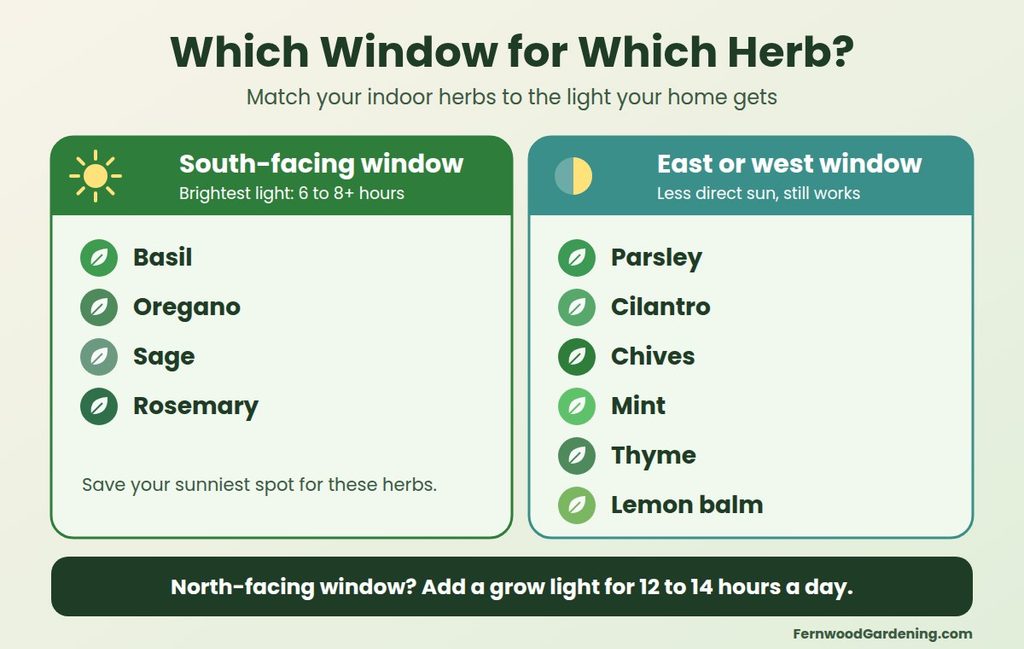
Most culinary herbs can grow inside, but the easiest ones tolerate the lower light, drier air, and cooler temperatures of a typical home. Iowa State University Extension lists the best herbs for growing indoors, including basil, chives, and thyme, for exactly this reason.
It helps to split herbs into two groups. Sun lovers like basil, oregano, sage, and rosemary want your brightest south-facing window, while more flexible herbs like parsley, cilantro, chives, mint, and thyme can manage in a spot with less direct sun, as The Philadelphia Inquirer’s herb-by-window guide explains. Matching the herb to your window is the best way to avoid disappointment.
10 Easy Herbs to Grow Indoors for Beginners
These are the herbs that grow well indoors with the least fuss, listed with the light and water each one needs.
1. Basil
Basil is the classic windowsill herb, and it grows fast in a warm room. It is a sun lover, so give it your brightest window or put it under a grow light. Pinch the stem tips just above a pair of leaves to keep the plant bushy, and remove flower buds as soon as they show up. Keep it away from cold drafts, because basil sulks when the temperature drops much below 50°F.
Light: bright, 6 to 8+ hours | Water: when the top inch is dry | Great for: pasta, pizza, and salads
2. Mint
Mint is very hard to kill, which is why it tops most lists of the easiest herbs to grow inside. It copes with less light than most herbs, so even a modest window can work. Always give mint its own pot, since the roots spread aggressively. Keep the soil lightly moist and trim often to prevent long, leggy stems.
Light: low to medium | Water: keep lightly moist | Great for: tea, drinks, and desserts
3. Chives
Chives grow as slim, grass-like clumps that fit nicely into small pots. They enjoy a bright window but forgive a less-than-perfect spot. Snip the leaves an inch or two above the soil and the clump will regrow. You can harvest again and again without replanting.
Light: medium to bright | Water: when the top inch is dry | Great for: eggs, soups, and baked potatoes
4. Parsley
Parsley is slow to get going, but it becomes a steady producer once established. It handles a window with less direct sun, and it likes a deeper pot because of its long taproot. Harvest the outer stems first and leave the center of the plant alone so it keeps growing.
Light: medium | Water: keep evenly moist, never soggy | Great for: sauces, garnishes, and salads
5. Thyme
Thyme is a compact, woody herb that actually prefers a little neglect. Its biggest enemy is soggy soil, so use a pot with excellent drainage and a gritty potting mix. Let the soil dry out between waterings. A small plant will supply plenty of tiny leaves for weeks.
Light: medium to bright | Water: let soil dry between waterings | Great for: roasted vegetables and chicken
6. Oregano
Oregano is a tough Mediterranean herb that loves a bright window. Pinch the tips regularly to stop it from stretching and to encourage fuller growth. It tolerates dry spells much better than overwatering, so go easy on the watering can.
Light: bright, near a south window | Water: let the top inch dry out | Great for: pizza, pasta sauce, and Greek dishes
7. Cilantro
Cilantro is a favorite in the kitchen, but it can be a bit moody indoors. It prefers cooler rooms and tends to bolt, meaning it flowers and sets seed, when the air gets too warm. Sow a fresh pot every few weeks so you always have young, leafy plants coming along.
Light: medium, cooler spot | Water: keep evenly moist | Great for: salsa, tacos, and curries
8. Lemon Balm
Lemon balm is a relative of mint with a fresh, lemony scent. Like mint, it adapts to moderate light and grows quickly, so it suits beginners who want fast results. Give it a pot of its own and trim it often to keep it tidy.
Light: low to medium | Water: keep evenly moist | Great for: herbal tea and fruit salads
9. Sage
Sage has soft, gray-green leaves and a savory aroma that is hard to beat. It wants a sunny window, so save your brightest spot for it. Sage dislikes wet roots, so water only when the top inch or two of soil is dry, and pick a few leaves at a time.
Light: bright | Water: let soil dry well between waterings | Great for: roasts, stuffing, and brown butter
10. Rosemary
Rosemary is the step-up herb on this list. It loves bright light and good airflow, and it is unforgiving of soggy soil. Give it a south-facing window or a grow light, use a fast-draining mix, and let the soil dry between waterings. Once it settles in, rosemary can live for years.
Light: bright, 8+ hours | Water: let soil dry well between waterings | Great for: potatoes, lamb, and bread
Indoor Herbs at a Glance
| Herb | Light need | Best window | Beginner rating |
| Basil | High | South | Easy |
| Mint | Low to medium | East or west | Very easy |
| Chives | Medium | East or west | Easy |
| Parsley | Medium | East or west | Easy |
| Thyme | Medium to high | East, west, or south | Easy |
| Oregano | High | South | Easy |
| Cilantro | Medium | East, cool room | Moderate |
| Lemon balm | Low to medium | East or west | Easy |
| Sage | High | South | Moderate |
| Rosemary | High | South | Moderate |
How to Grow Herbs Indoors Year Round
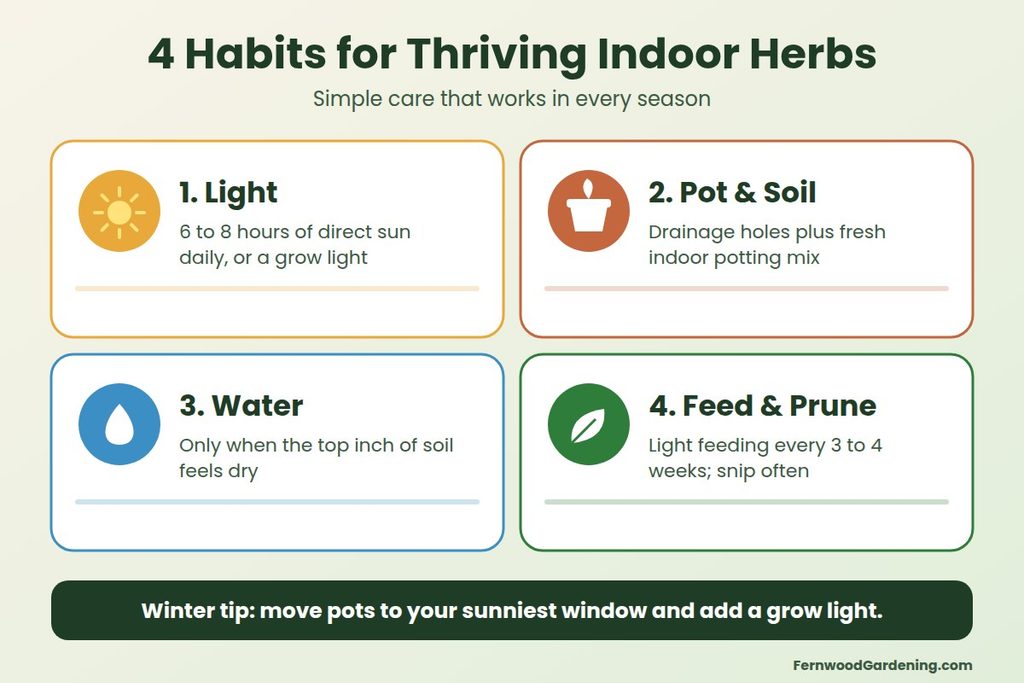
To grow herbs indoors year round, give them 6 to 8 hours of light, a pot with drainage holes, and a light potting mix, then water only when the top inch of soil is dry. Those four habits cover most of what beginners need to know.
Give Your Herbs Enough Light
Light is the most limiting factor for indoor herbs, so place them in the sunniest spot you have. Iowa State’s guide to indoor herb growing conditions suggests aiming for roughly eight hours of direct sun for most herbs, while Penn State Extension puts the minimum at about six hours. A south-facing window is the top choice, and a bright east or west window makes a decent backup.
North-facing windows usually stay too shady. Rotate your pots a quarter turn every week or so, a tip echoed in University of Illinois Extension’s windowsill gardening advice, so every side of the plant gets light and stems don’t lean toward the glass.
Choose the Right Pot and Soil
Pick a pot that is roughly 6 inches wide with drainage holes in the bottom, and place a saucer underneath. Fill it with fresh indoor potting mix rather than garden soil, which compacts in containers and can bring in pests. Mediterranean herbs like thyme, sage, and rosemary do best with a little added sand or perlite for faster drainage.
Water the Smart Way
Water thoroughly until the excess drains out, then let the top inch of soil dry before you water again. Overwatering kills more indoor herbs than anything else, and the roots rot quickly in soggy soil. Our guide on how often to water indoor plants explains how to read your soil, and the signs of overwatering plants will help you catch problems early.
Feed and Prune Regularly
Feed your herbs with a diluted, balanced liquid fertilizer every three to four weeks while they are actively growing. Harvest little and often, and never remove more than about a third of the plant at once. Regular pinching of the tips makes basil, oregano, and mint fuller instead of leggy.
Growing Herbs Indoors in Winter
Growing herbs indoors in winter works best when you move plants to your sunniest window, add a grow light, and water a little less often. Days are shorter and the sun sits lower in the sky, so even a south-facing window gives weaker light than it does in summer.
A simple LED grow light on a timer solves most winter problems. Scotts Miracle-Gro suggests a grow lamp schedule of 12 to 14 hours daily when natural light falls short. Penn State’s Year-Round Gardening series on PBS also recommends supplemental grow lights for indoor herbs when plants struggle.
How to Grow Herbs Inside During the Winter
- Move your pots to the brightest south-facing window you have.
- Add an LED grow light on a timer and follow the distance guidelines on the package.
- Keep leaves from touching cold window glass overnight.
- Place pots away from heaters, radiators, and hot air vents.
- Water less often, since growth slows down in the colder, darker months.
- Rotate pots weekly so growth stays even.
For more seasonal planning, see our breakdown of how much sunlight garden plants need, which covers light requirements in more detail.
Common Mistakes to Avoid
Most herb problems come from a handful of easy-to-fix habits. Watch out for these:
- Overwatering: soggy soil leads to root rot and yellow leaves.
- No drainage holes: water pools at the bottom and suffocates roots.
- Too little light: pale, stretched stems mean your plant is reaching for the sun.
- Crowding mint: it will take over any pot it shares.
- Harvesting too hard, too soon: let new plants establish before you cut back heavily.
Indoor Herb Growing FAQs
What is the easiest herb to grow indoors?
Mint is usually the easiest herb to grow indoors, with chives, basil, and parsley close behind. Mint tolerates lower light and a little neglect, which makes it very forgiving for first-timers. Just keep it in its own pot so its roots don’t crowd out other plants.
Can herbs grow indoors without sunlight?
Yes, but only if you replace the sun with a grow light. Herbs can’t grow on room lighting alone, so an LED grow light on a timer is essential in a windowless space. Scotts Miracle-Gro’s grow lamp guidance suggests 12 to 14 hours a day.
How often should I water indoor herbs?
Water indoor herbs when the top inch of soil feels dry, which is usually every few days to once a week. The exact timing depends on the herb, pot size, and how warm and bright your room is. Check the soil with your finger instead of following a fixed schedule, and see our guide on how often to water indoor plants for more detail.
Can you grow herbs indoors year round?
Yes, you can grow herbs indoors all year as long as they get enough light. In summer a sunny window may be enough, while winter usually calls for a grow light to make up for shorter, weaker daylight. Harvesting little and often keeps the plants productive in every season.
Which herbs should not share a pot?
Mint and lemon balm should always have their own pots because their vigorous roots take over. In fact, Iowa State University Extension recommends giving each herb species its own container, since one pot rarely suits several herbs at once. If you do combine herbs, pair plants with similar needs, such as thyme, oregano, and sage, which all prefer drier soil.
Should I start herbs from seed or buy plants?
Starter plants from a garden center are the faster, more reliable choice for beginners. Seeds cost less and give you more variety, but herbs like parsley and thyme germinate slowly. If you want to try seeds, begin with basil or cilantro, which sprout more readily.
Start Your Windowsill Herb Garden Today
The best herbs to grow indoors are the ones you will actually cook with, so start with two or three from this list. Choose herbs that match your window, give them good drainage, and water with a light touch. You will have fresh flavor within reach all year.
Ready for more? Browse our gardening tips for beginners and garden plants for beginners for your next project. Which herb will you plant first? Tell us in the comments.